
Engineering Problems and Phone Call Problems
Perhaps sometimes we really should just phone it in
There is a distinction that the infrastructure planning world doesn’t tend to make explicitly, but that explains an enormous amount of why large projects cost what they cost. It’s the distinction between engineering problems and what I like to call “phone call problems.”
An engineering problem is a problem that requires engineering to solve. A river or a mountain is in the way, or the soil is unstable. These are real constraints, and the job of the engineer is to find a way through, over, under, or around them. That is what engineers are for, and they are very good at it.
A phone call problem is a problem that looks like an engineering problem but isn’t. Another agency controls the right-of-way, a utility needs to be moved, a private company doesn’t want to cooperate, a municipality is being difficult, or a landowner is reluctant to sell. These are human problems. They’re problems of incentive, authority, and will. They have human solutions. But infrastructure projects, which are generally run as engineering projects, have a persistent tendency to treat them as engineering problems instead. The results are predictable and expensive.
Metro North, serving the New York Metropolitan Area, is a mid-sized commuter railway with around a quarter-million riders per day on its three main lines, about a fifth the ridership of the Paris RER A alone. It operates its trains out of Grand Central Terminal, which has no less than 44 platform tracks—the most of any station on the planet. By comparison, RER A’s stations generally have 2 or 4 platform tracks each. Back in the 80s, the MTA built a new two-level tunnel under the East River, with the upper level for the subway and the lower level intended to bring Long Island Rail Road trains to the Grand Central area, which is a much bigger office district (more on the history of that district in a future article) than around the main LIRR terminal at Penn Station. Though the subway opened in 1989, this being New York, it took until the early 2000s to get serious work underway to use the lower level for the LIRR.
Subscribe for free, for infrastories from around the world.
There was, however, a problem. Metro North made very clear that they couldn’t possibly fit the LIRR’s additional trains when they only had 44 tracks to work with. Now, one might reasonably note that since London’s Liverpool Street Station moves significantly more trains per day on fewer than half as many platform tracks, it might just be possible for Metro North to squeeze a few of its fellow MTA railroad’s trains in. But New York may operate with different physics than the British capital.
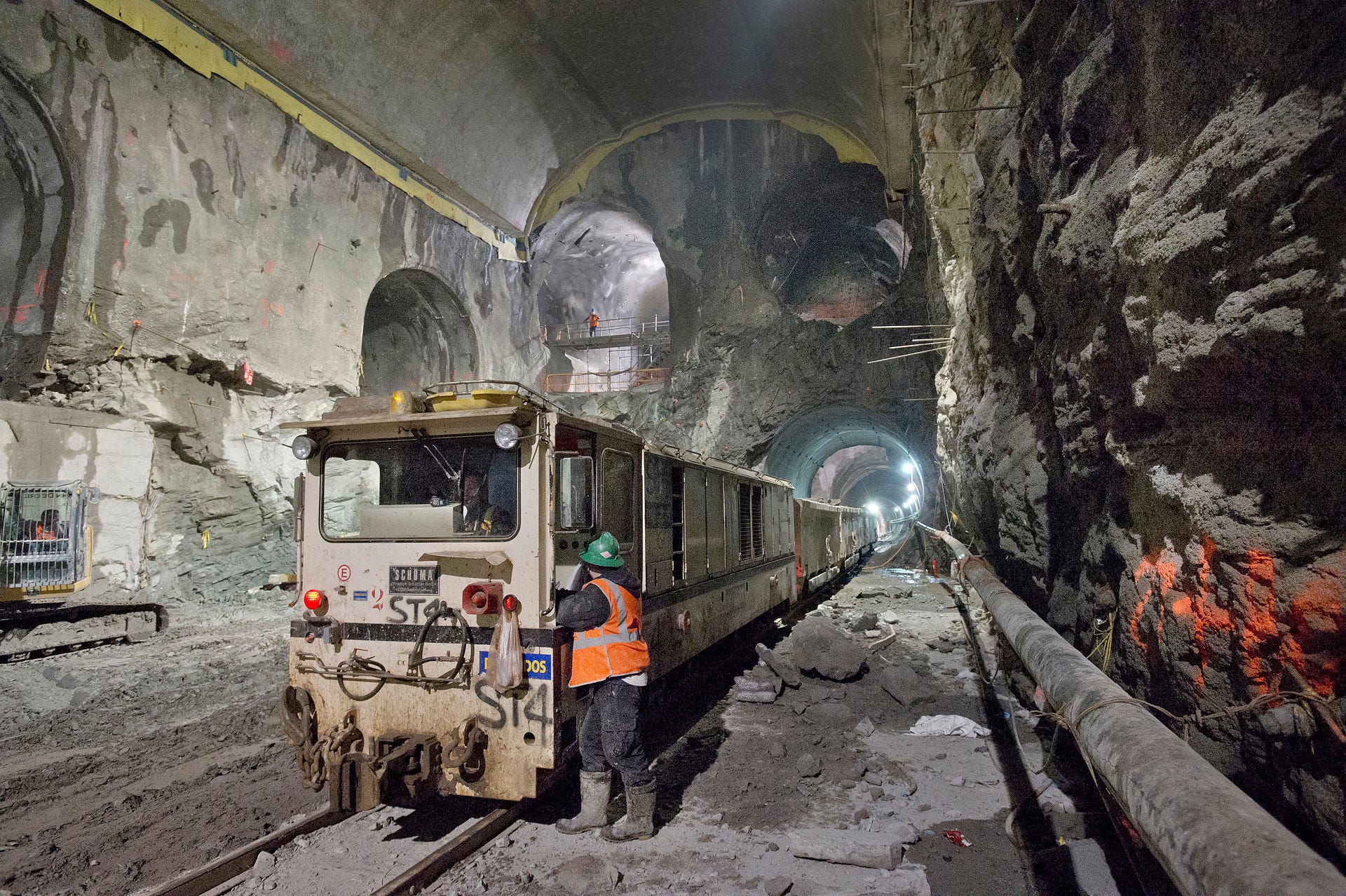
Unfortunately, this problem was treated as an engineering problem, not a phone call problem. Metro North had given their requirements, and they now needed to design within these constraints. So the engineering solution became a gigantic cavern deep under the existing station with 8 more tracks completely disconnected from the others. It ended up costing about $12 billion and took 15 years to complete, even though much of the tunnel had already been sitting there since the 80s.
This is hardly a unique situation. The Caltrain HSR Compatibility Blog has long discussed similar problems at San Jose Diridon station, where unwillingness to share infrastructure between Caltrain and new high-speed service will force a billion-dollar elevated structure. The same problem is occurring at the other end of the line. There is serious discussion of tunnelling into Los Angeles Union Station rather than using its existing capacity and approaches. Union Station is not full and its approaches are not unusable or particularly congested by global standards. The tunnel is being driven by the difficulty of reaching agreement with the agencies and operators that control access to the existing infrastructure. This is an engineering solution to a coordination problem at a very high price.
We’ve also recently heard talk that Toronto’s Union Station has been deemed full (it’s not) and planned Alto high-speed services might have to go somewhere else.
These are all phone call problems. It may be a genuinely difficult phone call: the negotiations may be complex, the competing interests real, and the other parties not obviously wrong to want what they want, but the answer to a difficult negotiation is a better negotiator, or a more senior one, or a bigger cheque, or all three. It is not a multi-billion-dollar structure built to avoid having the conversation.
The pattern is not accidental. It reflects something structural about how infrastructure projects are organized and evaluated. When a project hits an engineering obstacle, there is a clear professional framework for responding. Engineers assess the constraint, develop options, model the costs, and recommend a solution.
When a project hits a human obstacle, the framework breaks down. Negotiation where very high-level action is needed to move the needle is often not in the toolkit. Escalating to senior political leadership requires admitting that the project has a political problem, which project managers are reluctant to do. Paying a private company to move is often perceived as rewarding obstruction. The human problem therefore gets quietly reclassified as a technical constraint, and the engineers are enlisted to find a way around it.
This reclassification is almost never made explicit. Nobody writes a memo saying, “We have decided to spend four billion dollars to avoid a difficult conversation.” It happens gradually, through a series of individually defensible decisions, each of which adds cost and complexity, until the project that emerges looks almost nothing like the one that was originally proposed.
Treating a problem as a phone call problem rather than an engineering problem does not mean that the problem is easy. It means it requires a different kind of effort. It requires political seniority. Many coordination failures in infrastructure projects persist because no single person with enough authority over all the parties involved has chosen to make them their problem. When that person shows up, such as a premier, a minister, or a mayor with genuine clout, problems that festered for years can sometimes be resolved in days or hours. The history of successful large infrastructure projects is very often a history of someone deciding that the human obstacles were their personal responsibility to clear.
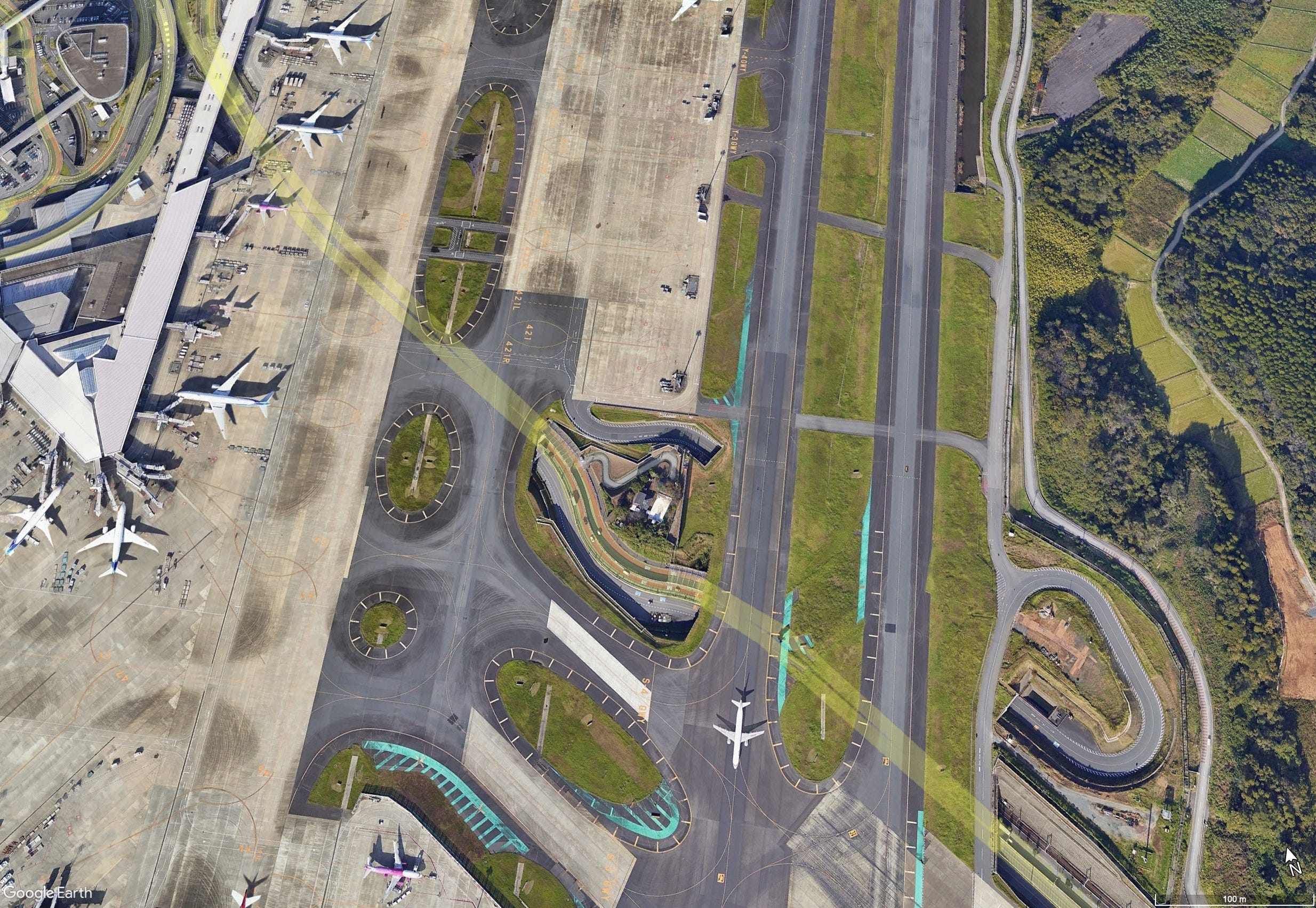
One of the legendary cases was the new Munich airport. The 70s and 80s had seen fierce battles over new airport construction around the world. Tokyo’s Narita airport still has farm houses in the middle of the runways (and is missing a crosswind runway, which makes for amazing crosswind landing videos) because they couldn’t manage to buy the land. Bavaria’s long-time minister-president, Franz-Josef Strauss, took a different tactic. As the story goes, he personally knocked on the door of the farmhouse of every affected farmer with a bottle of schnapps, explained the importance of the airport for Bavaria, and hammered out a deal. The new airport opened in 1992 with, by the standards of the era, remarkably few obstacles.
Solving phone call problems requires deploying money differently. Buying out a difficult private party, compensating a utility generously, or paying an existing operator enough to make cooperation worth their while is almost always cheaper than the engineering alternative. The reluctance to do this is partly cultural, since it sometimes feels like rewarding bad behaviour, and partly bureaucratic, because procurement rules make it easier to spend money on construction than on negotiation or compensation.
And it requires a willingness to escalate. The phone call only works if the person on the other end believes that the caller has the authority to make the financial or other commitments necessary. A mid-level person negotiating can’t make compelling firm offers, and a mid-level person on the receiving end will never get fired for saying no and preserving the status quo. Sometimes getting a deal done also requires someone with the authority and the will to make non-cooperation painful. That requires political cover that project managers rarely have and rarely ask for.
There is a version of infrastructure planning that treats every human obstacle as a fixed constraint, no different from a granite formation or a flood plain. In that version, the engineer’s job is to route around whatever is in the way, at whatever cost that routing requires. This version is very expensive.
There is another version that begins by asking, for every obstacle encountered: is this a rock, or is this a person? If it is a person, what would it take to move them? And is that cheaper than building around them? The answer, almost always, is yes.
The infrastructure projects that have been built cheaply (there are many, though they rarely get the same headlines) tend to share a common feature. Someone in authority decided early that coordination failures were not requirements to be accommodated through engineering; they were problems to be solved. So they picked up the phone.
You’re right…it’s the culture…and I’ve def experienced this sort of thing first hand in life (even thought I’m only 21).
This feels like so much of a no-brainer after reading this…we should just have real dialogue and conversations to try and come up with a fair deal. We need to stop being afraid to escalate things out of politeness or avoidance of confrontation.
It’s like this: life is full of difficult decisions and conversations…but those are the exact moments where great things happen. When these conversations are had, they lead to collaboration and humans working together towards adjacent goals. These conversations are what the world is built on.
It’s my belief that hardly anyone is against making things better…be it rail transport or something else. They just need to be invited (directly) into the conversation and treated/compensated fairly.
The sooner we start having these difficult conversations, the better things will get with housing, transit, and anything, in my opinion. People are missing human connection to their governments.