
Canada Learned How To Be Good at Nuclear.
To get better at infrastructure, we must be willing to learn.
If you want to get good at building infrastructure, you have to learn the lessons of your failures. The Canadian nuclear industry offers a perfect example of this.
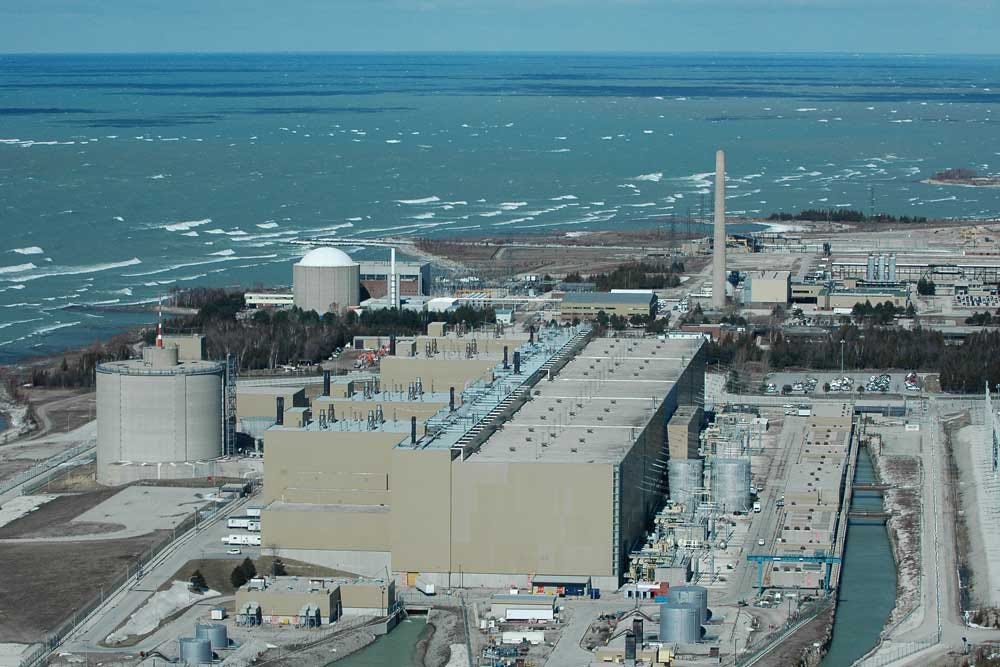
Canada has always been a major player in nuclear energy. Its important role in the Manhattan Project led to the creation of Atomic Energy of Canada Limited, a crown corporation owned by the federal government and charged with developing nuclear energy for civilian purposes. Out of this work came the CANDU reactor, a distinctive design that had some significant advantages over other designs like the Pressurized Water Reactors (PWRs) and Boiling Water Reactors (BWRs) more commonly used in other countries. Most notably, CANDU reactors can be refuelled without being shut down, and they can use natural uranium rather than enriched fuel. But the ability to refuel while running comes from the fuel being housed in pressure tubes. Those pressure tubes are under enormous stress and, over time, can develop cracks.
CANDU reactors have been used around the world, in Argentina, South Korea, India, and Romania. But by far the biggest operator is Ontario, which has built twenty full-sized reactors. Back in 1983, Ontario Hydro discovered the pressure tube cracking issue the hard way when one of them suddenly ruptured, forcing an emergency shutdown. No real harm was done and no radiation was released, but it was a wakeup call that prompted much closer attention to the potential issue. The discovery of significant pressure tube problems as well as a power surplus and other issues in the late 90s led to the sudden idling of eight of Ontario’s twenty reactors.
A few years later, power demand was growing again and it was apparent that more generation capacity would be needed. Bruce, then the largest nuclear plant in the world with eight reactors (four of which had been idled) was leased to Bruce Power, a private company. A decision was taken to begin refurbishing some of the reactors so that they could be restarted and their lives extended for several more decades.
There are genuine advantages to this kind of midlife reconstruction since you emerge with a much more modern plant, but it is an extraordinarily complex process. You are essentially rebuilding the reactor from scratch, in a radioactive environment. And nuclear projects, generally speaking, do not go smoothly. Virtually every nuclear project around the world for decades has come in over budget and behind schedule. Ontario’s first refurbishments were no exception, with significant delays, major cost overruns, and serious questions about whether it made more sense to just build natural gas plants instead. Natural gas plants have high and volatile long-term fuel costs, but they are cheap to build. They feature what are essentially oversized jet engines, making them manufactured products rather than bespoke megaprojects like nuclear power plants.
Subscribe for free, for infrastories from around the world.
But this is where the story gets interesting. The Canadian nuclear industry did not look at those early failures and say, “These projects are all unique, there’s nothing to learn, just budget more time and money next time.” They did something much harder and far more valuable: they acknowledged that the projects had gone wrong, not as an unavoidable fate, but as something that could be understood and corrected. And they asked how it could be done better.
One of the most consequential things they did was build a full-scale physical model of the reactor. Construction crews, engineers, and technicians practiced on it over and over until the procedures were essentially muscle memory. When it came time to work on the actual reactor, which is of course radioactive (meaning you want to minimize time spent inside it), they could carry out the work precisely and efficiently. They applied this same mindset across many dimensions of the work with systematic analysis of what had gone wrong before and deliberate redesign around those lessons.
The results speak for themselves. At Darlington, Ontario Power Generation and its partners were able to completely rebuild four reactors, in a radioactive environment, for $12.8 billion dollars. They also managed to do it four months ahead of schedule and $150 million under budget. In the nuclear world, this is absolutely unheard of. France’s new EPR reactor at Flamanville cost over C$21 billion and was about twelve years late and four times the original budget, while the two new AP1000 units at Georgia’s Plant Vogtle cost close to C$50 billion and were about seven years late and 2.5 times over budget. Even China’s new European Pressurized Reactors (EPRs) and AP1000s were about four years late and far over budget.
Obviously rebuilding an existing reactor is in some ways less complex than building a new plant from the ground up. On the other hand, it is far more complex since everything is radioactive! Canada is now arguably the only place on earth that can deliver major nuclear projects on time and on budget. If Canadian nuclear workers can rebuild a reactor—replacing pressure tubes, steam generators, and countless other components—in a radioactive environment, it seems reasonable to ask whether those same people could build a new reactor in a non-radioactive greenfield environment. We won’t know until we try, but if new CANDU reactors could be built anywhere near the cost-per-unit implied by the Darlington refurbishments, recognizing the additional work required for the rest of the plant, it would represent a dramatically more affordable source of electricity than the international nuclear alternatives and, arguably, many other sources of baseload power.
Because of the sheer number of reactors it has been refurbishing, Canada has done more major nuclear construction work than almost any jurisdiction on earth over the past fifteen years. It has built real expertise, institutional knowledge, and a supply chain, and it has proven that it can do huge amounts of construction work that can meet the incredibly exacting standards of nuclear regulators. Shoddy construction work was responsible for many of the delays and overruns on the nuclear projects in France, Georgia, and elsewhere. People who have rebuilt sixteen reactors in a radioactive environment might well be able to build new reactors just about as well, especially if they keep the changes from existing designs to a minimum. After all, design changes are what can produce years of added regulatory processes and ensuing delays. We should recognize what we have built, and think seriously about what we could do with it.
There is a broader lesson from this, too. Infrastructure costs have been skyrocketing around the world in recent years, especially in countries like Canada, the United States, and the UK. But this is not inevitable, and Canada’s nuclear sector is a rare example of a big cost surge that was arrested and even turned around. That happened because of a willingness to recognize that projects went badly and a determination to figure out why and how this could be prevented in the future. We all know of many projects that have faced serious delays and cost overruns; the question is whether their builders followed that same path of figuring out why and how to make sure it doesn’t happen on the next projects.
Hi
Learnt about this from John
Enjoy receiving my copies.