
Paris' RER Revolution
A city that solved its phone call problems the right way
We are building Infrastory from the ground up, so if you enjoy this post a share to others that might be interested has a huge impact on our project, thanks!
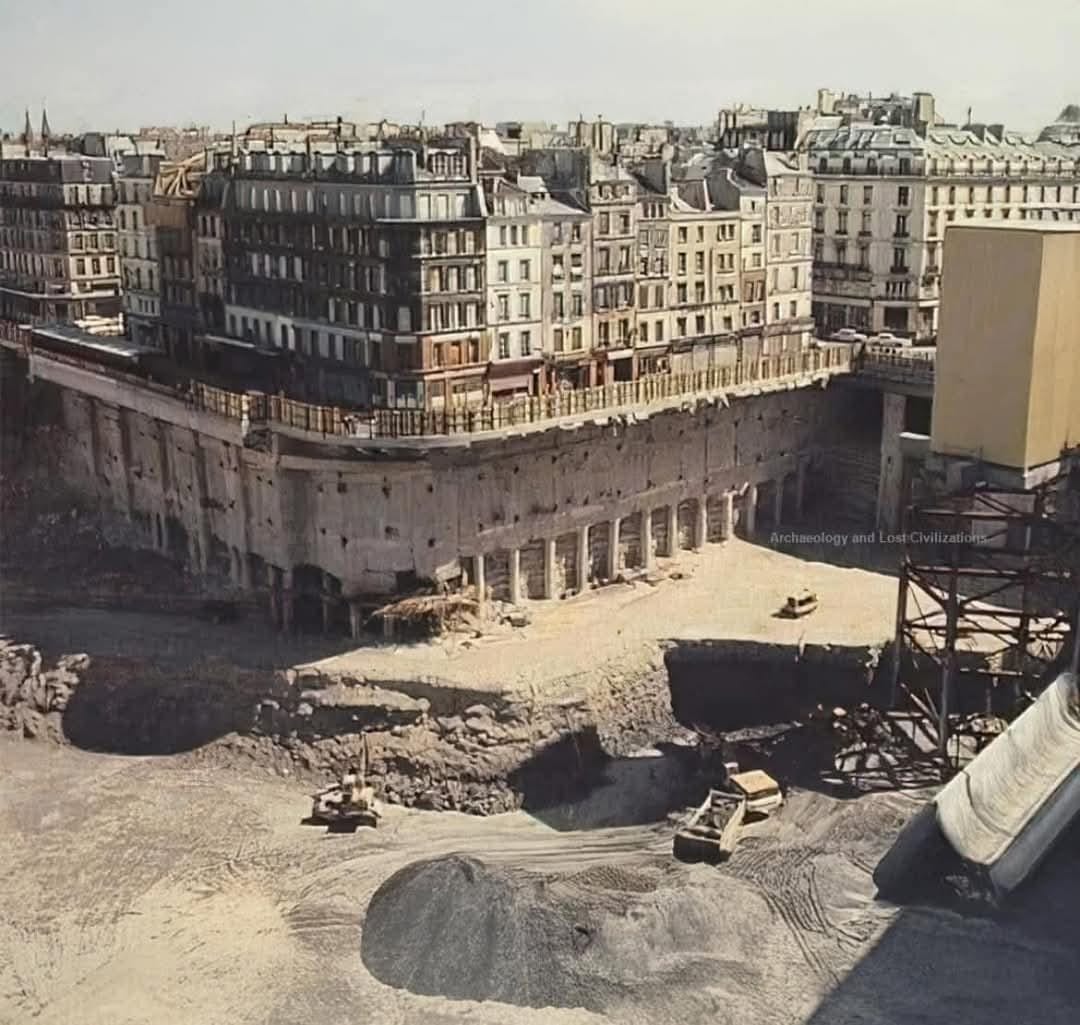
In the mid-1960s, Paris was on the verge of spending billions of francs to duplicate rail infrastructure that already existed. It was a classic phone call problem. The RATP, the local transit authority that ran the Métro, and the SNCF, the national railway running regional and intercity trains, had their own separate corridors, technologies, and operating practices that made sharing infrastructure seemingly impossible. But it wasn’t, as we will see.

Paris retained its status as a city of global importance in the postwar period due in part to its extraordinarily extensive urban infrastructure. Following the development of the world’s densest metro network within the historic city walls, national and regional governments recognized the need to serve a rapidly suburbanizing population. At the dawn of the Fifth Republic in the late 1950s, trains from historic and newly developed suburban towns ran to century-old terminal stations arrayed around the perimeter of Central Paris. Commuters who couldn’t walk from those stations to their destination were forced into cumbersome transfers onto the congested Metro.
In the 1960s, the French national government embarked on a program of comprehensive regional planning that sought to resolve these problems through large-scale infrastructure investment. A centrepiece of these plans was the development of a new rapid transit system that would be both faster and more capacious than the existing Métro, permitting it to extend beyond the historic city walls to serve the rapidly expanding metropolitan region. Although the plans were beset by cost overruns and jurisdictional squabbles at first, the national government persisted in developing the network. Drawing on inspiration from sources as distant as Japan, French planners devised a creative strategy that overcame technical, jurisdictional, and bureaucratic obstacles to connect disparate suburban lines of the national railway into a high-frequency, high-capacity urban network that doubled as an express rapid transit system within the city. The development of the RER transformed the metropolitan region and enabled the development of transit-oriented suburban communities that house and employ millions, while retaining a close connection with the historic centre of the capital city.
Though Paris enjoyed an exceptionally dense urban metro network, most of it was the legacy of construction before the Second World War. Public transportation expansion had stalled by the 1950s, with only insignificant extensions to the urban Métro reaching completion. The national government during the postwar Fourth Republic was wracked by repeated changes in government, which hindered long-term planning. No progress was made on the development of a system that would unify the broader, rapidly suburbanizing urban region.
The Fifth Republic, proclaimed by Charles de Gaulle in 1958, had aspirations to demonstrate and celebrate France’s grandeur through planning and great infrastructure projects. The modernization of Paris was to be, as it had been for previous aspirational French leaders, a centrepiece of that effort. The population of Greater Paris was growing rapidly in the postwar period, adding between 100,000 and 150,000 new residents per year, and much of this growth was occurring outside the historic city walls. Despite the ideas of planners like Le Corbusier, who sought to rebuild the historic city in the modernist style, the city built by the Baron Haussmann in the 19th century was left largely intact while most new development was relegated to the suburbs. A new public transportation system was needed to tie these rapidly growing communities to the heart of the capital.
De Gaulle’s government radically restructured Paris’ governance with the creation of a unified District de la région parisienne (District of the Paris Region), an autonomously financed body that would be responsible for implementing the national government’s projects in the metropolitan area of the capital. At its head, de Gaulle appointed Paul Delouvrier, a veteran administrator who was given substantial powers to push through projects. He would play a critical role in the development of the RER program.
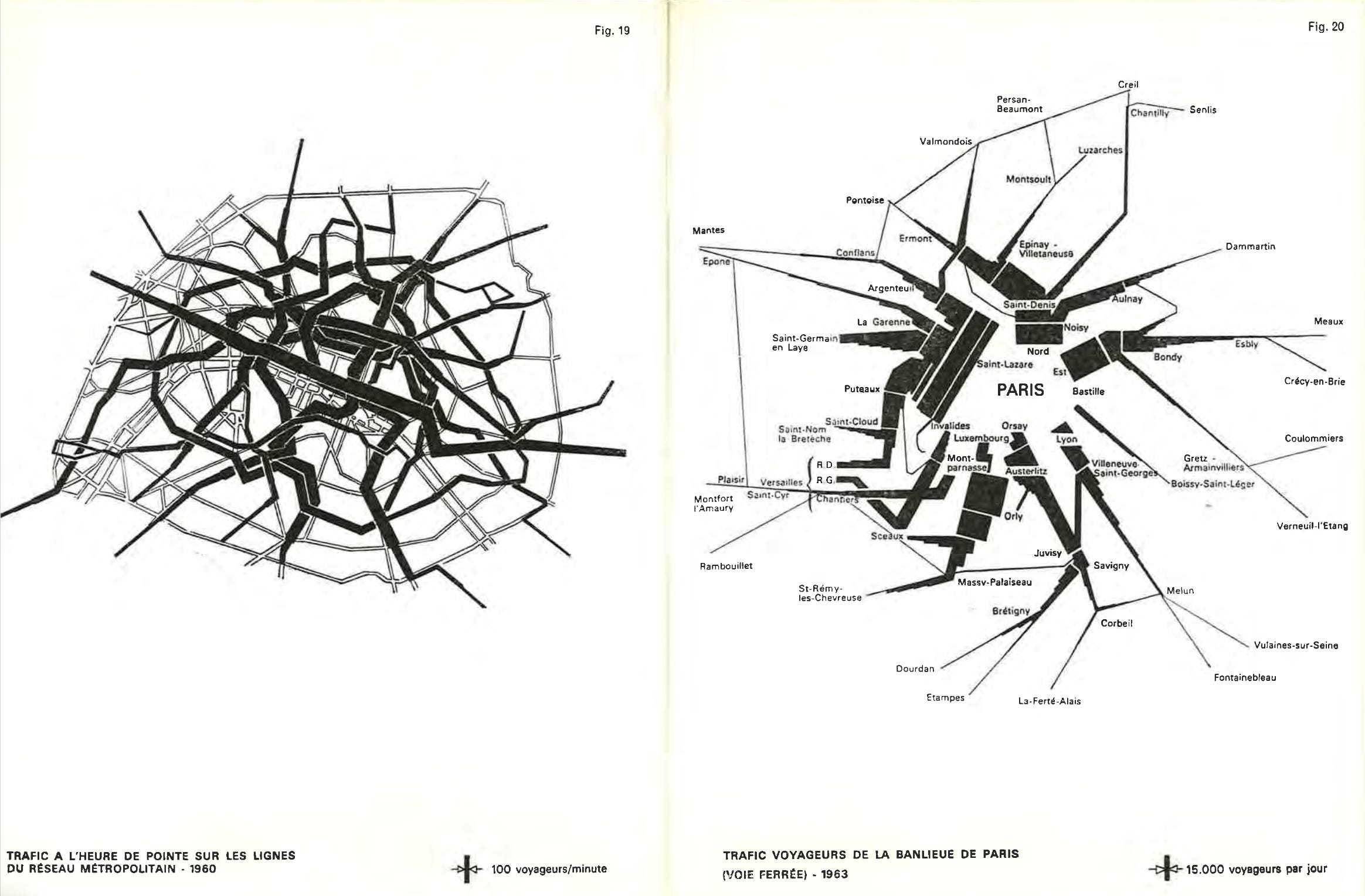
The grand plans of de Gaulle and Delouvrier for Paris were intended to rapidly overcome the infrastructure deficit that had developed during the Fourth Republic. The Gaullist plan, the Schéma Directeur d’Aménagement et d’Urbanisme de la Région de Paris, was far more ambitious, seeking to accommodate 7 to 8 million more residents in the Paris region. The most optimistic projections, based on extrapolating rapid postwar population growth, anticipated a metropolitan population of 20 million by the year 2000. The new plan included major infrastructure investments, such as a new airport to the north of the city in the town of Roissy that would become Charles de Gaulle International, and extensive suburban growth concentrated in two axes to the north and south of the city. It also finally elaborated on plans for a comprehensive regional rail network incorporating the new east-west line (now RER A) then under construction. It would add two additional north-south lines to create an ‘H’-shaped network centred on the historic city centre, amounting to more than 250 km of new railway lines throughout the urban area. Delouvrier was enthusiastic about the potential of the plans to encourage development in the historically less prosperous eastern half of the metropolitan region.
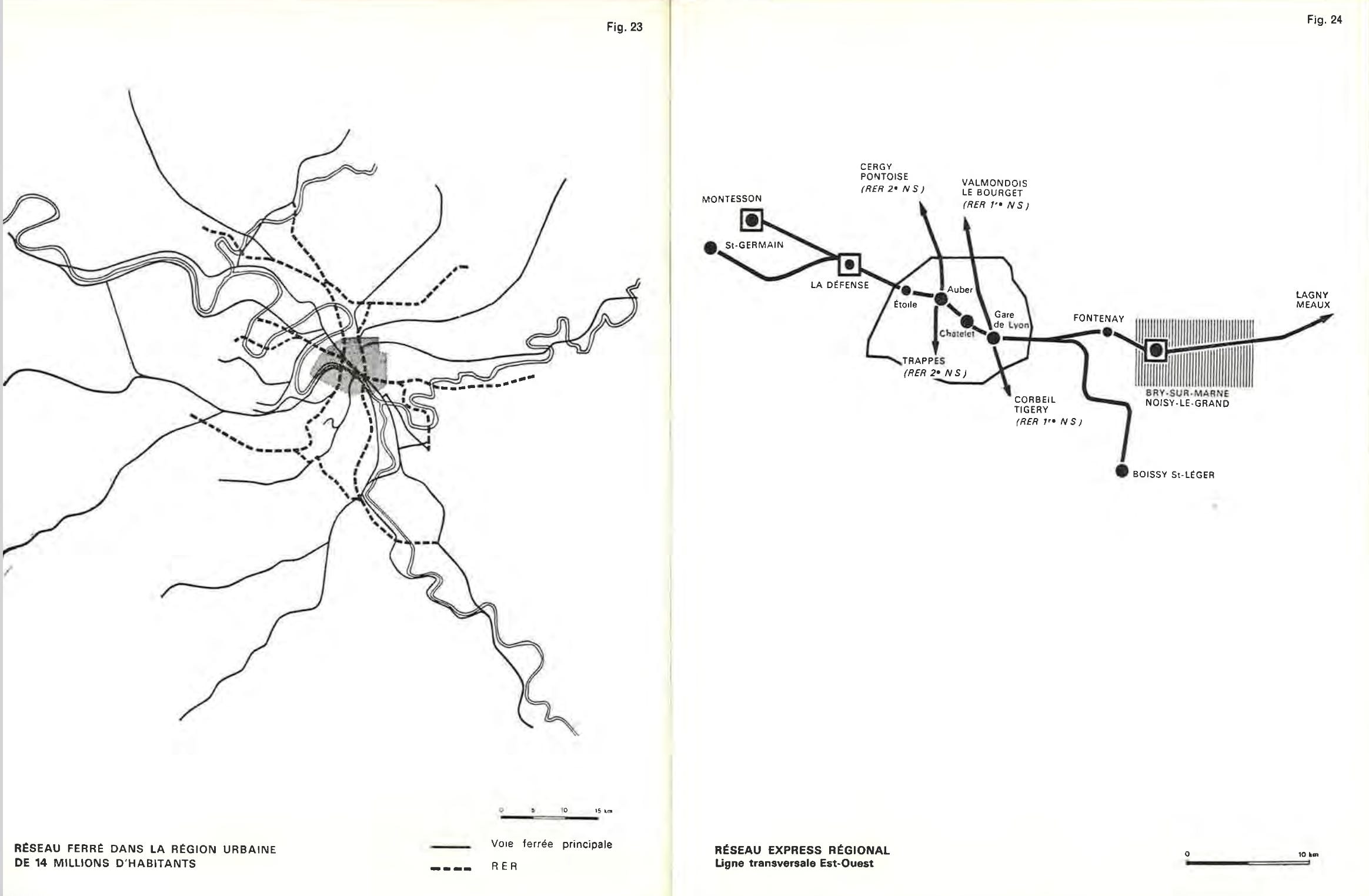
This plan resembled contemporary projects in the United States, such as the Bay Area Rapid Transit in the San Francisco Bay Area and the Metro in Washington, D.C., in that it relied almost exclusively on new construction and was not designed to interoperate with the existing regional rail network. The new lines would parallel or completely rebuild hundreds of kilometres of existing rail corridors then operated by the SNCF, expending vast sums on duplicating infrastructure that already existed.
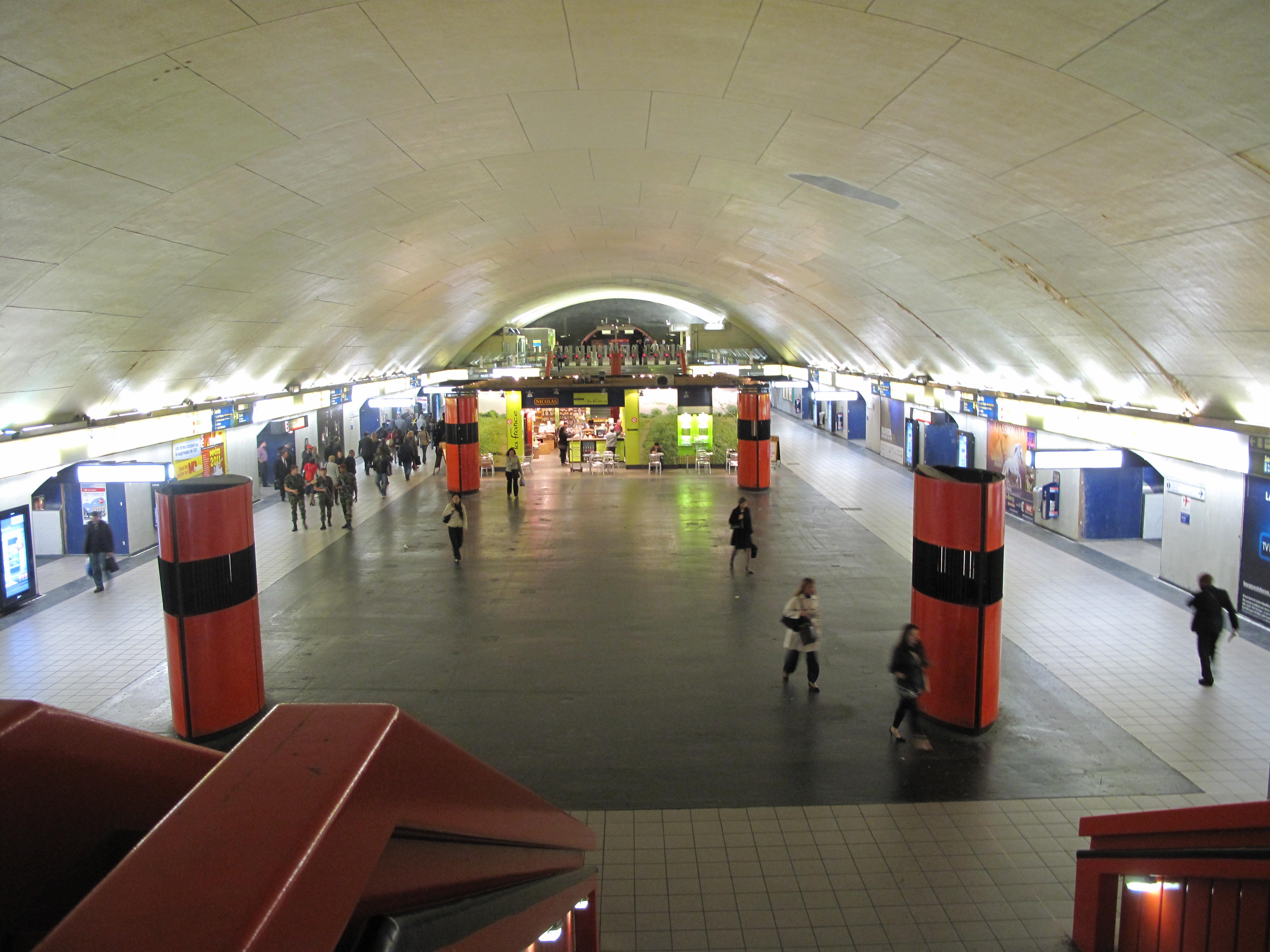
Construction of the first stations on the east-west line began as underground stations were gradually added to the suburban lines in the east and west of the city, with the ultimate intention of connecting the two corridors. Several lines were ceded by the SNCF, which was then uninterested in urban transportation, to the RATP, which sought to rebuild and repurpose the suburban lines as part of a segregated regional rapid transit system. These first stations spawned one of the most enduring controversies about the initial plans. The architecture of the stations was intended to mirror that of the Paris Métro stations designed by the celebrated engineer Fulgence Bienvenue, featuring a single arch ceiling rising over the tracks and platforms and no central supports.
While this engineering task was relatively simple in small and shallow Métro stations, constructing the vastly larger and deeper stations of the RER—250 metres long, 45 metres wide, and 30 metres high—posed a severe challenge. Unsurprisingly, these stations faced immense cost overruns, ultimately costing 1.3 billion francs. The high cost of constructing the new lines placed the prospect of further construction in doubt.
Around this time, a group of French engineers and administrators went on a junket to Japan. Most junkets might have a limited impact at best, but this one was worth billions. The fundamental problem in Paris was not engineering. These were phone call problems: disputes over jurisdiction between the RATP and the SNCF. Instead of running trains seamlessly from the SNCF network onto the RATP-administered RER lines in the city centre, the RATP sought to either take over the SNCF lines to the exclusion of all other rail traffic, or to duplicate them, largely through expensive underground construction. Tokyo showed them another way. Though no fundamental technical obstacles existed that would prevent shared operation, the two organizations were hesitant to cooperate on a plan to mitigate their operational differences, which included different electrical systems, different operating rules, and even which side of the rail corridor was dedicated to which direction of travel. On the SNCF, trains drove on the left, while the RATP trains drove on the right. But some of the specific barriers were even more minute. SNCF drivers preferred to stand while driving; RATP drivers sat. The brake handle was on the right on RATP trains, and the left on SNCF trains.
Subscribe for free, for infrastories from around the world.
Christian Gerondeau, acting as adviser to the prime minister, formed a steering committee that included directors of all of the organizations participating in the RER project. The committee was established to study the project in detail and to find ways to manage and overcome the challenges that it had faced. The committee bravely chose to look halfway across the world to find a model for emulation, pointing to the metro system of Tokyo that effectively transported millions of passengers per day across a vast urban area that dwarfed even the French capital. They were stunned to see the Chuo line, which moved 100,000 passengers per hour into a single terminal station consisting of one 10-m wide platform and two tracks. Most significantly for Paris, many of Tokyo’s private railway lines that served the city’s far-flung suburbs did not deposit their passengers at a single urban terminal. Trains would run on private railway lines from deep out in the suburbs until they reached central Tokyo. Then, they’d dive into the regular municipal metro, mixing with normal metro trains. At the other end, they’d often emerge from the metro and run on another private railway deep out into the suburbs once again. This required the co-operation of the municipal subway corporation and two private railway companies on either side of the metropolis. This example of cooperation between private companies convinced the Parisian planners that integration between the RATP and SNCF, which were, after all, both bodies of the French State, was possible.
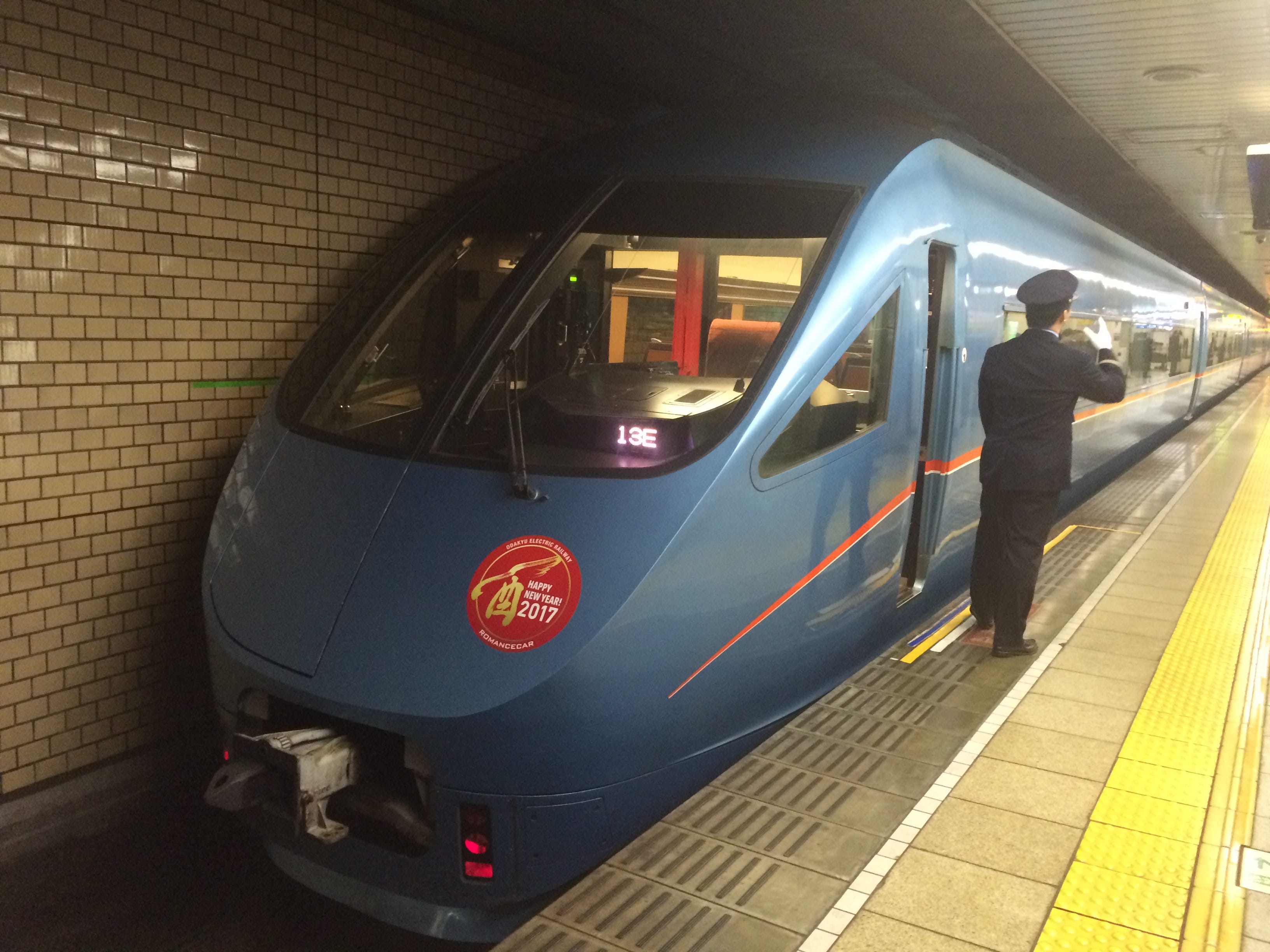
A subsequent tour of the Tokyo Metro system by the French planners also demonstrated the value of cross-platform transfers, which greatly facilitated the handling of vast numbers of riders transferring between lines, as it eliminated the need for them to crowd onto stairs or escalators. Before their visit to Tokyo, French engineers had been anxious about the potential safety implications of such a practice, but viewing the crowds safely handled in the Japanese capital convinced them of its feasibility. This model would be employed at Châtelet-Les Halles station, the critical junction in the centre of Paris between the north-south and east-west lines that would be at the heart of the RER network.
New technical approaches had to be devised to permit the interoperation of SNCF and RATP trains. New MI 79 trains were designed specially to operate on the different electrification and signalling systems of the two railways. They even had separate controls in the cab designed around the preferences of each operator. At Gare du Nord, the SNCF operator would get off and the RATP operator would get on and the train would switch between the different systems, all in a matter of seconds and basically without being noticed by riders. All trains were made a part of the RATP fare system, which facilitated connections with the urban métro. An agreement between the SNCF and RATP allocated revenues proportionally. Once the agencies decided that they wanted to cooperate, the technical obstacles were all surmountable.
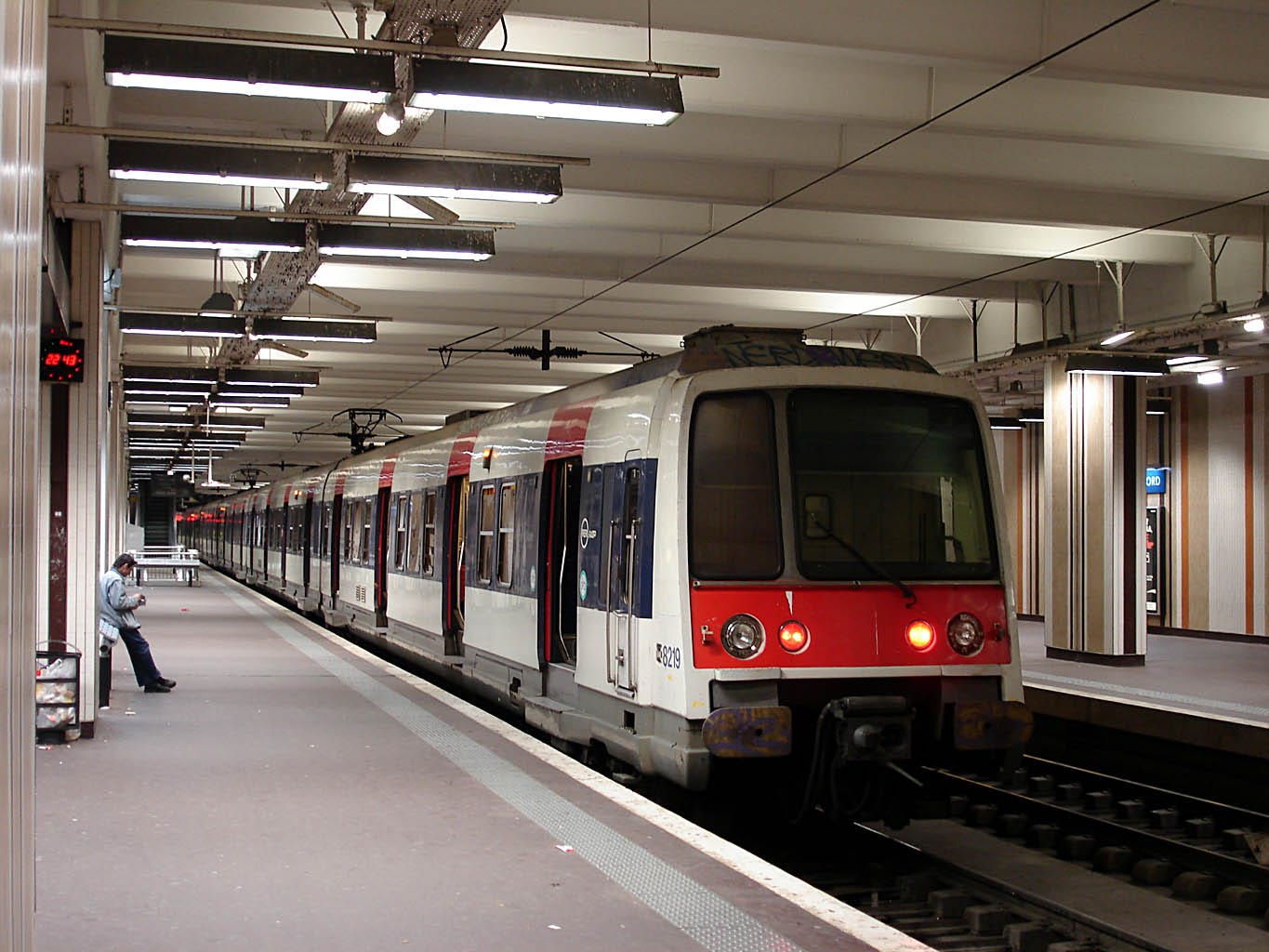
Once cooperation between the RATP and SNCF was possible, a vast array of new opportunities became available to the Parisian planners. Before, new lines required extensive construction of new lines and the rebuilding of existing lines. After, RER could be rapidly deployed on existing lines. A few short segments of tunnels in the centre of Paris could now connect nearly the entire network of SNCF suburban lines. Instead of tunnelling through the suburbs, the legacy of 19th-century railway construction provided already-built corridors that spanned the metropolitan region.
The RER worked because it had strong and clear political backing, a clear objective, technically informed leadership that could make decisions and force disparate agencies to collaborate, and ultimately the willingness to use creative means and new technologies to bridge gaps.
In the mid-1960s, Paris was considering a plan that would spend billions of francs to duplicate regional rail networks that already existed. When the people who were planning the RER went to Tokyo, they saw completely separate rail operators sharing infrastructure and realized that they too could change the way they operated to be able to work together. They didn’t conclude that Japan was somehow too different to emulate; their reaction was that if Japan can do it, France can do it too, if not better. Out of that, we got the most successful regional rail system in Europe.
Awesome piece, well done.
Love it - but one thing I don’t understand is I rarely - maybe never? - actually see RERs using the metro lines… there are many stations with connections to both, but where are they actually sharing track?
Would love another forward-looking post about the planned expansions of Paris’ rail systems, or the expansion of cycle infrastructure which has been pretty massive, if not perfectly seamless.